





 Loading...
 Reload document
 Open in new tab
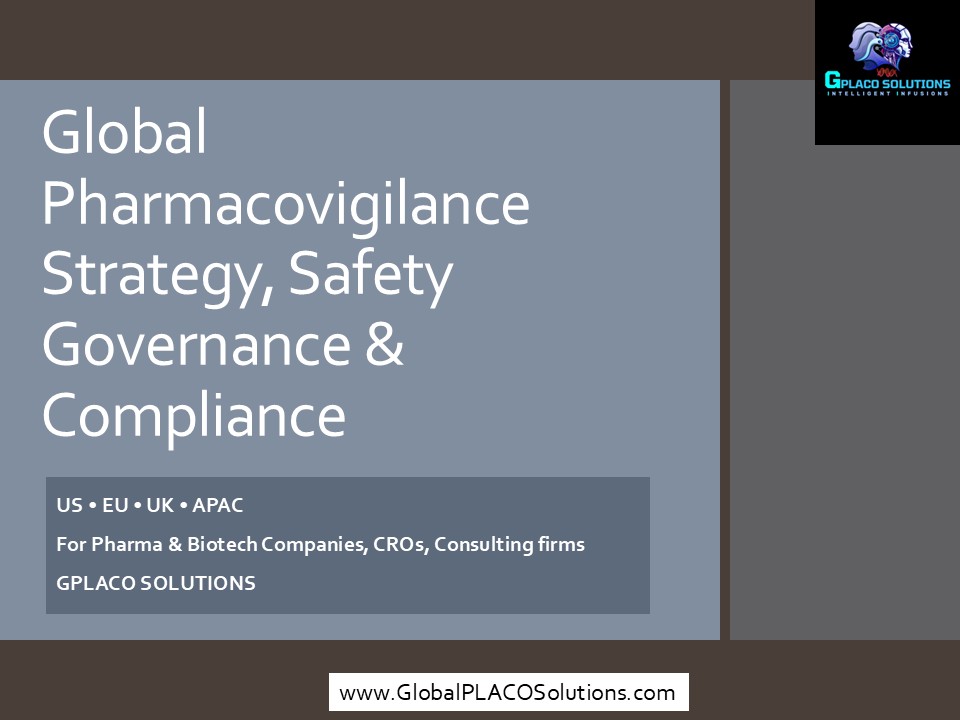
Mastering Your Global Pharmacovigilance Strategy and Safety Governance
Developing a robust Global Pharmacovigilance Strategy is the cornerstone of any successful pharmaceutical expansion into international markets. As companies look to navigate the complex regulatory environments of the US, EU, UK, and APAC regions, the need for a unified approach to safety governance has never been more critical. Without a clear strategy, organizations risk regulatory delays, compliance gaps, and potential threats to patient safety.
The Importance of Safety Governance
Safety governance is the framework of rules, roles, and processes that ensure an organization’s safety data is handled with integrity. When integrated into your Global Pharmacovigilance Strategy, safety governance provides the oversight necessary to manage risk-benefit profiles across different jurisdictions.
Effective governance ensures that:
Safety signals are detected and escalated according to global timelines.
Standard Operating Procedures (SOPs) are harmonized across all regional offices.
Executive leadership has clear visibility into potential safety risks.
Regional Nuances in a Global Pharmacovigilance Strategy
One of the biggest challenges in maintaining a Global Pharmacovigilance Strategy is the variation in requirements between agencies like the FDA (USA), EMA (Europe), and MHRA (UK).
United States (FDA): Focuses heavily on Post-Marketing Safety Surveillance and robust Risk Evaluation and Mitigation Strategies (REMS).
European Union (EMA): Requires a detailed Pharmacovigilance System Master File (PSMF) and a qualified person responsible for pharmacovigilance (QPPV).
United Kingdom (MHRA): Post-Brexit, the UK requires its own specific reporting pathways and a UK-resident QPPV or national contact person.
APAC Region: Diverse requirements ranging from strict local language reporting to the adoption of ICH guidelines.
Leveraging Technology for Strategic Oversight
To achieve a high-performing Global Pharmacovigilance Strategy, many firms are now turning to AI and Machine Learning. Automation can assist in processing the high volume of Individual Case Safety Reports (ICSRs) and help in the screening of global medical literature. By automating routine tasks, your safety team can focus on the strategic analysis of data, ensuring that your Global Pharmacovigilance Strategy is proactive rather than reactive.
Building Audit Readiness into Your Strategy
A strategy is only as good as its execution during an inspection. Your Global Pharmacovigilance Strategy must include a continuous “Audit Readiness” program. This involves regular mock audits, gap analyses, and ensuring that all SDEAs (Safety Data Exchange Agreements) are up to date.
Conclusion
A well-defined Global Pharmacovigilance Strategy acts as a roadmap for sustainable compliance and global growth. By prioritizing safety governance and staying ahead of regional regulatory shifts, pharmaceutical companies can ensure they deliver safe and effective therapies to patients worldwide. At Global Placo Solutions, we provide the expertise needed to design and implement these complex global systems.